


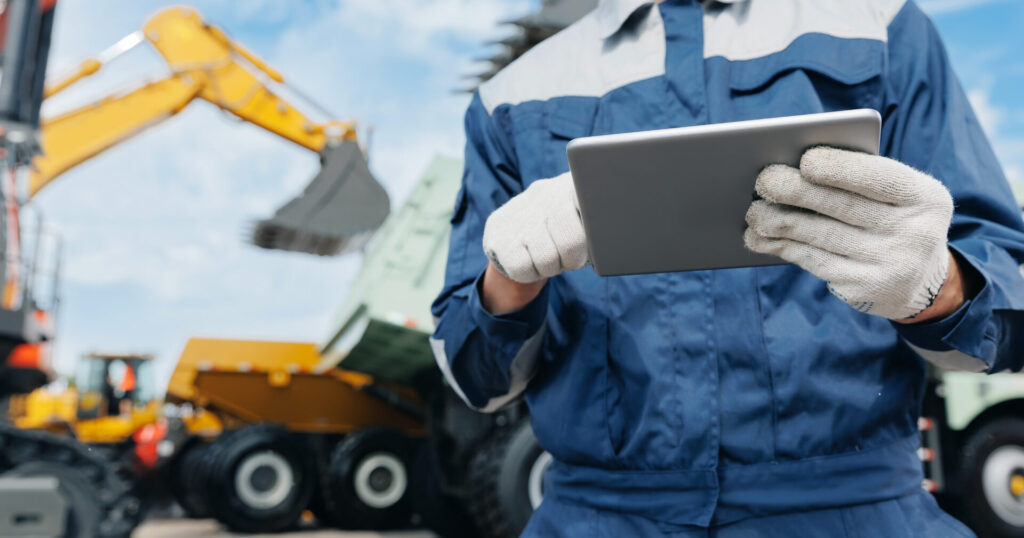
AI in Equipment Dealerships: From Proof of Concept to Practical Impact

The equipment dealership industry stands at a pivotal moment. After years of AI hype, we’re now seeing practical applications that directly address real challenges, technician shortages, inventory optimization, and machine uptime.
During our recent webinar, I discussed how dealers can move beyond the noise and implement solutions that deliver measurable business outcomes. Here are the key insights every dealer should consider.
Why AI Matters Now
The technology has fundamentally evolved. What wasn’t possible five years ago is now accessible to businesses of all sizes. Companies like OpenAI have democratized sophisticated AI capabilities, while the data available to dealers has exploded, telematics, device data, error codes, and countless other streams beyond traditional transactions. This convergence creates unprecedented opportunities to derive actionable intelligence.
The Foundation: Data Readiness
Any AI implementation will only be as good as the data that feeds it. Too many dealers rush into AI projects only to discover their foundational data isn’t ready.
Data readiness means having your core systems, ERPs, CRMs, and portal applications, properly curated and structured. Before chasing the latest AI application, invest in building a robust data platform. Partner with cloud providers like Microsoft Azure, AWS, or Google Cloud. Focus on data visualization, curation, and governance. This foundational work will pay dividends across every AI initiative you undertake.
Practical Use Cases Delivering Results Today
Across dealerships, AI is already driving measurable impact in key areas of operations. Here are some of the most practical, results-driven applications we’re seeing today.
Technician Assistance and Training
The technician shortage remains critical. AI-powered tools are bridging this gap by capturing institutional knowledge, decades of expertise trapped in the minds of senior technicians. Junior technicians equipped with AI agents can access conversational guidance drawing on your dealership’s entire service history, dramatically accelerating learning curves and improving first-time fix rates.
Fleet and Inventory Optimization
AI analyzes demand patterns, market conditions, and historical data to predict optimal inventory levels. I’ve seen models identify slow-moving parts that are highly likely to become obsolete, predict seasonal demand spikes at specific locations, and recommend transfers to maximize fill rates while minimizing carrying costs. Dealers are seeing meaningful inventory turns increases and significant working capital optimization.
Predictive Maintenance and Machine Uptime
By analyzing telematics data through AI models, we can move beyond reactive service to truly predictive maintenance. The goal is shortening the entire workflow, from detecting a potential issue to dispatching a technician. When you can predict machine failure before it happens and proactively swap equipment or schedule preventive service, you transform the customer experience while reducing costly downtime.
Starting Small, Thinking Big
Don’t try to boil the ocean. Pick one problem area, parts inventory turns, technician productivity, or warranty claim recovery. Define success with specific, measurable outcomes. Start with a focused pilot, one warehouse, one product category, one location. Prove the concept, demonstrate ROI, then scale. This approach reduces risk, builds organizational confidence, and creates champions who drive broader adoption.
The Human Element: Always in the Loop
AI is not here to replace your people. The philosophy we believe in is “human in the loop.” AI excels at processing data, identifying patterns, and making recommendations. Humans excel at judgment, context, and complex decision-making. The winning formula combines both.
When you build AI solutions that solve genuine pain points, helping technicians do their jobs better, enabling back-office staff to complete in two hours what previously took twenty, adoption follows naturally. People embrace tools that make their work more efficient.
Governance and Trust: Non-Negotiable Foundations
As AI scales, governance becomes critical. Key principles:
Transparency: Users should understand why AI makes specific recommendations and what factors drive decisions.
Privacy and Security: Implement robust controls around data access and model training with proper role-based security.
Responsible AI: Be clear about scope. Is your model trained exclusively on your data or shared across a dealer community?
Model Governance: Log everything. Track how models evolve and maintain audit trails as you would with any critical business system.
The Path Forward
The technology exists. The use cases are proven. The question is no longer “if” but “how quickly can we adapt?”
My advice for dealers:
First, form a small AI committee within your organization. Create champions who can drive awareness and coordinate efforts across departments. This is a business transformation, not just a technology project.
Second, partner with experienced vendors who can cut through the noise. The AI landscape evolves daily. Find partners who will be honest about what’s possible today versus what’s aspirational.
Third, invest in your data infrastructure now. Whether you’re ready to implement AI today or six months from now, you’ll need that foundation. Dealers who build robust data platforms today will have a significant competitive advantage tomorrow.
Looking Ahead: The Agentic Future
The next wave of efficiency will come from agentic workflows, multiple AI agents working together seamlessly. Imagine: telematics detects a pattern suggesting equipment failure. An AI agent automatically creates a work order. Another analyzes technician locations and assigns the job to the nearest specialist. The technician receives diagnostics assistance. Meanwhile, another agent checks parts inventory and triggers reorders if needed.
This isn’t science fiction—it’s the natural evolution of today’s point solutions. Multiple AI agents, each built for a specific task, working together and collaborating with humans at key decision points. This is the future taking shape, and we’re already building toward it.
The equipment dealership industry has weathered many transformations. AI represents perhaps the most significant in recent memory. Unlike past technology waves that promised much and delivered little, AI is already proving its value in practical, measurable ways.
Dealers who approach this thoughtfully, investing in data foundations, starting with focused pilots, maintaining human oversight, and scaling based on proven results, will emerge stronger and better positioned to serve their customers.
The journey begins with a single step. What will yours be?
Watch the Full Webinar
This summary captures the key themes from our discussion, but there’s so much more detail in the full conversation. If you want to dive deeper into specific use cases, hear the nuanced discussions around implementation challenges, or learn more about the questions other dealers are asking, I encourage you to watch the complete webinar recording.
In the full session, we explore:
Detailed examples of AI applications in service, parts, and rental operations
Specific recommendations for building your AI committee and driving organizational adoption
Technical considerations around data platforms and infrastructure
Real-world scenarios showing how AI workflows come together end-to-end
Answers to dealer questions about APIs, implementation timelines, and getting started
Whether you’re just beginning to explore AI or already running pilot projects, the full webinar provides practical insights you can apply immediately in your dealership.